


Who you gonna call? Guinea pig myth-busters!
Many guinea pig welfare concerns originate from myths and beliefs passed from owner to owner, misleading marketing or even outdated advice. It can be difficult to know what information to trust, which is why, at CAS, we believe education and support are so important. By replacing myths with facts, we can help guinea pigs lead healthier, happier and more enriching lives.
Read on, to bust some myths and separate fact from fiction!
“Guinea pigs can live with rabbits” – FALSE
Guinea pigs are social animals so they do need the company of other guinea pigs, but they shouldn’t live with rabbits.
Why?
Different diets – Much like us, guinea pigs cannot make their own vitamin C. Their diet should therefore be high in vitamin C, which can be found in their pellets and some fresh vegetables. This is very different to a rabbit’s nutritional needs.
Different communication – They have different ways of communicating. This means a rabbit cannot replace the company of a guinea pig, and vice versa. This can result in both parties being lonely even though they are together.
Risk of injury – Rabbits have strong hind legs and can accidentally (or sometimes intentionally) injure a guinea pig with their hops and kicks.
“Guinea pigs don’t need much space” – FALSE
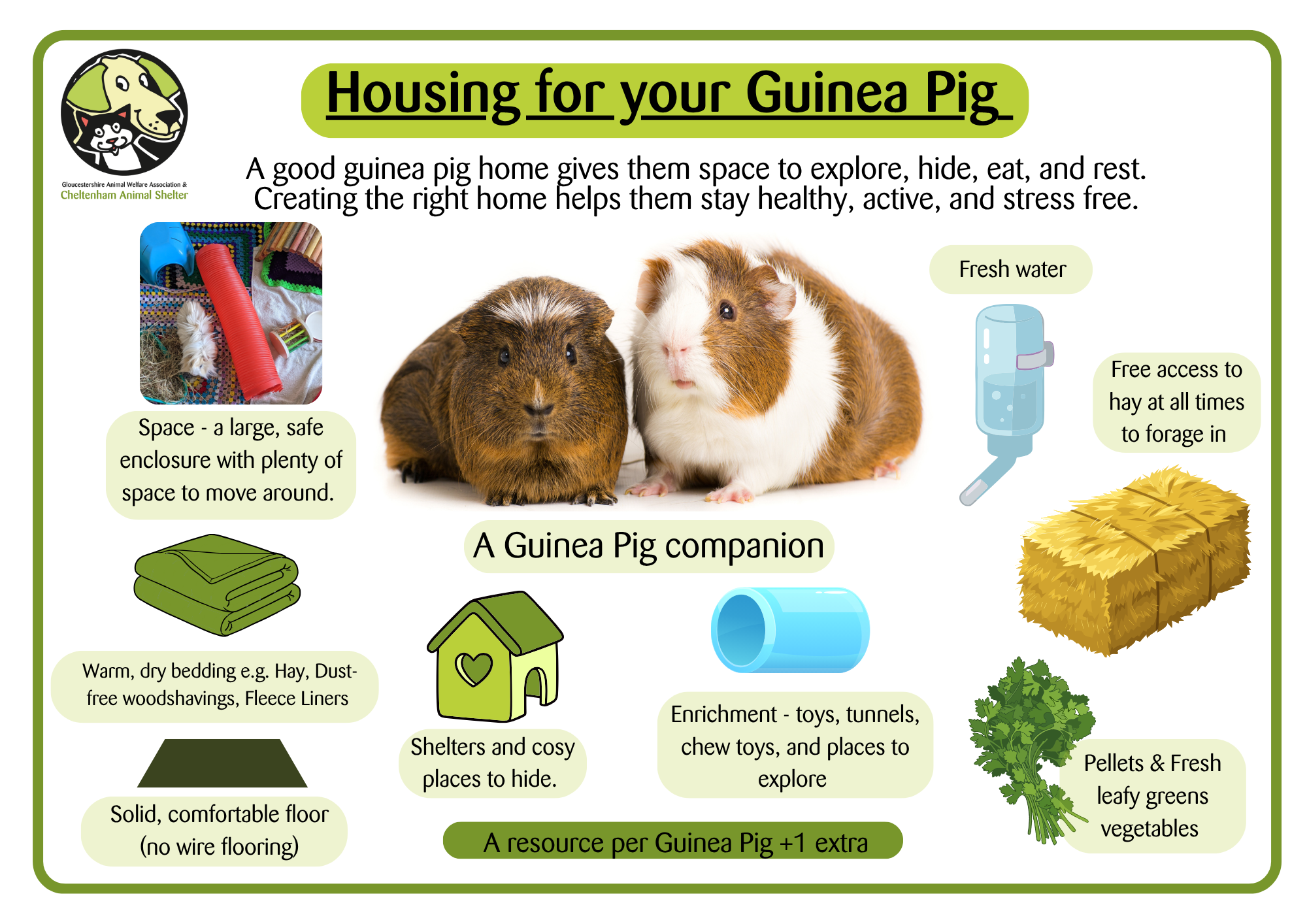
The small cages that are often sold for guinea pigs can be misleading to prospective new owners. These enclosures are often too small. For two guinea pigs the minimum space should be 5 ft X 2ft.
Guinea pigs are active – They need space to explore. Large enclosures offer plenty of space for toys, hides, and tunnels which keeps them happy, active and mentally stimulated. More space also helps prevent guinea pig grumbles and fighting between housemates.
Increase your guinea pig’s lifespan – If they do not have sufficient space it can lead to boredom and health complications, such as, heart disease, diabetes, and bumblefoot. With proper care guinea pigs can live approximately 5-6 years.
“They hide to feel safe” – TRUE
It is a guinea pigs’ instinct to hide to help them feel safe and secure. They will seek shelter if they feel unsure or want to relax. In their enclosure, there should be plenty of tunnels and natural grassy or untreated wooden hideouts spread throughout their pen.
Please note, sudden changes in behaviour such as, excessive hiding may indicate stress or illness. In this event contact your veterinarian for advice.
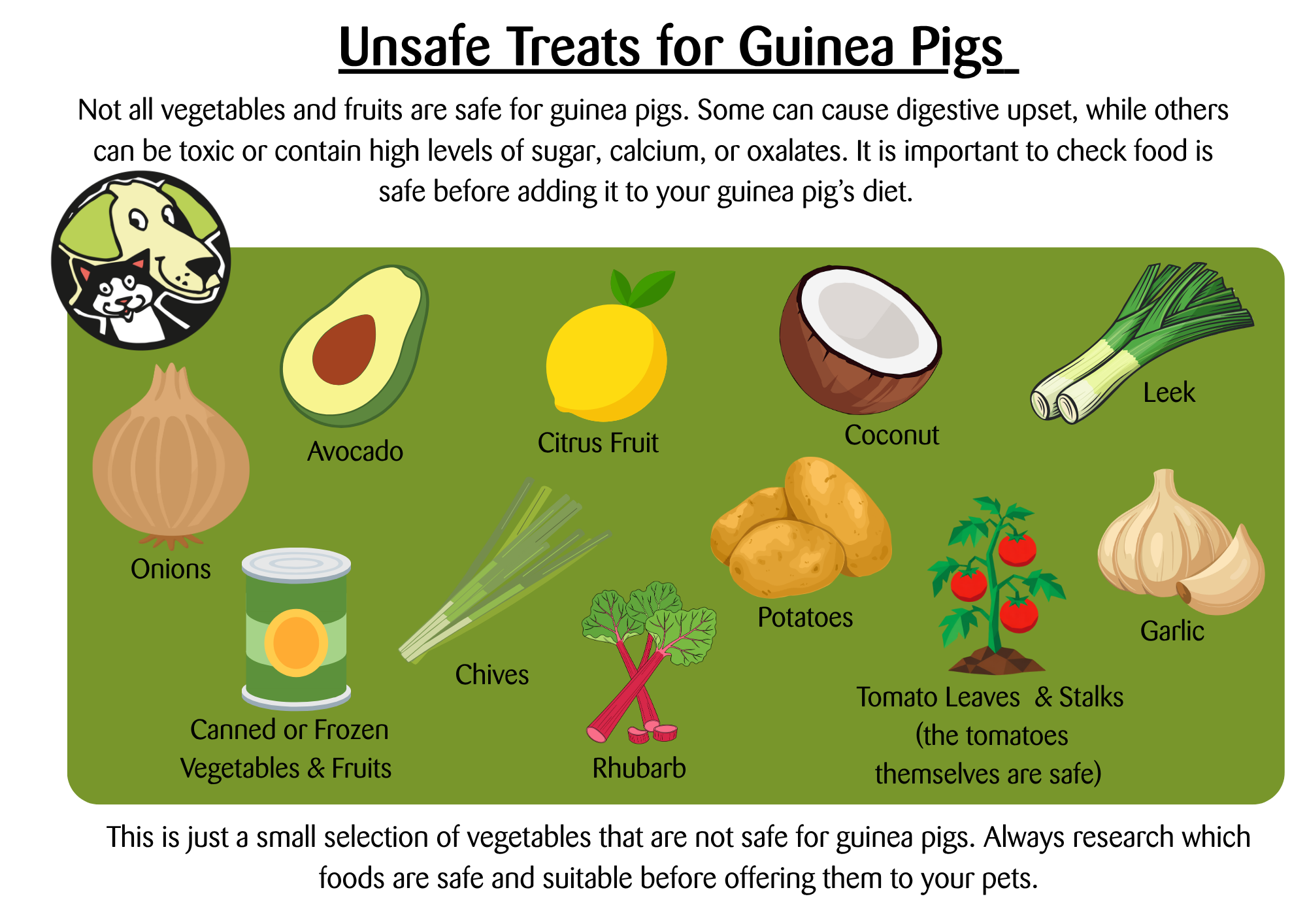
“Guinea pigs can eat all vegetables or salads” – FALSE
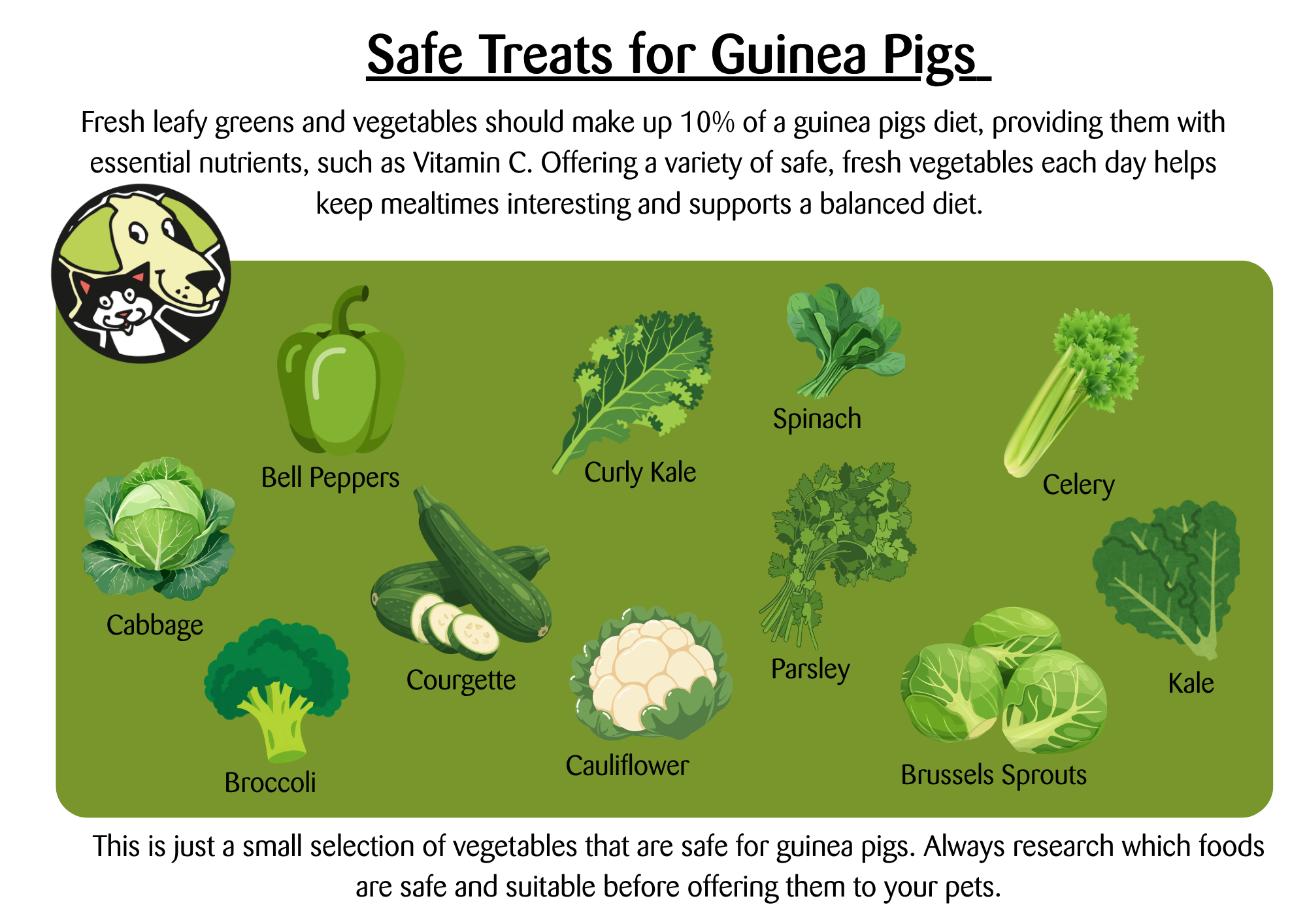
Whilst vegetable and fruit are an essential part of their diet and provide them with vitamin C not all fruits and vegetables are safe for our guinea pigs, and some should only be given as a treat. It is important to research what vegetables and fruit are safe, to be given occasionally, or toxic for our guinea pigs.
“Guinea pig’s teeth never stop growing” – TRUTH
A guinea pig’s teeth never stop growing!
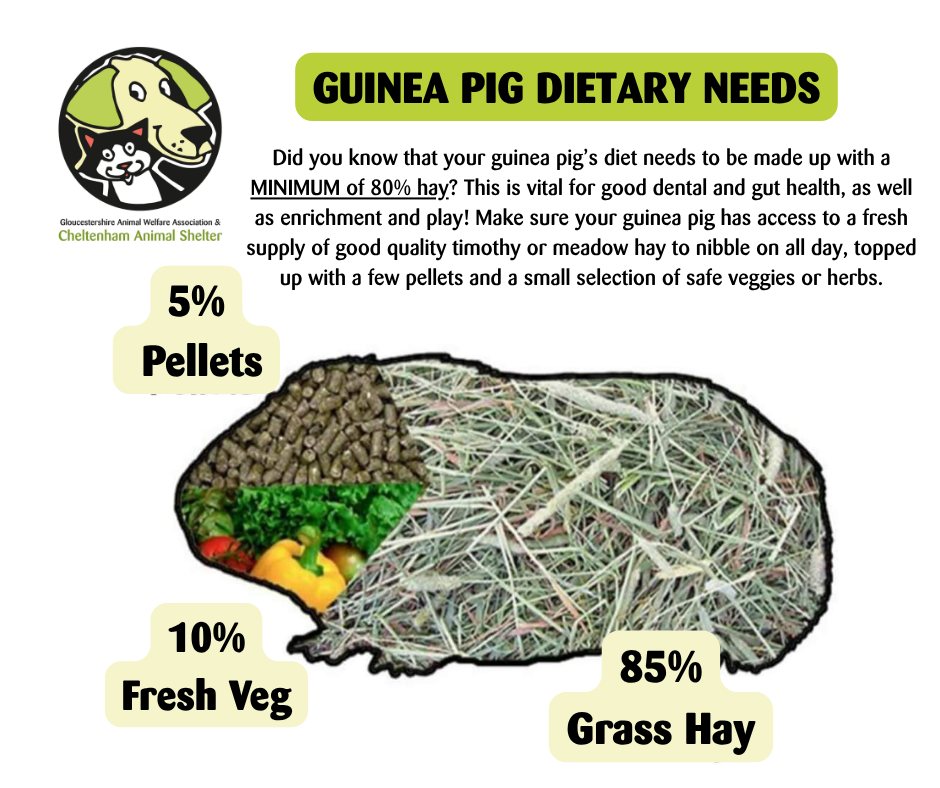
To avoid dental disease and prevent overgrowth, it is essential they are provided with a suitable diet and items to chew.
They should always have access to grass and fresh hay to naturally gnaw down their teeth. Food such as, their pellets, their favourite herbs, and suitable vegetables encourage them to chew and grind.
Chews, such as apple wood sticks and rosewood, can also be great for your guinea pig’s dental health and provide entertainment.
“They make great pets for kids” – TRUE & FALSE
No pet should be considered as a “starter animal” or a child’s responsibility.
Due to their social nature, and with the correct care and consideration, they can make fantastic family pets. This does not, however, make them easy pets to care for. Before introducing guinea pigs into your household ensure:
- Research – You have researched their needs and confirmed they are the right fit for your family.
- Responsibility – An adult should take on the rule of responsible pet ownership including their health, diet, housing, and daily needs.
- Commitment – They are a long-term commitment and can live for several years with the correct care.
- Respect – Guinea pigs can be nervous and need to be handled carefully and respectively. We believe in always giving our pets space and choice.
“Guinea Pigs Don’t Need to See a Vet” – FALSE
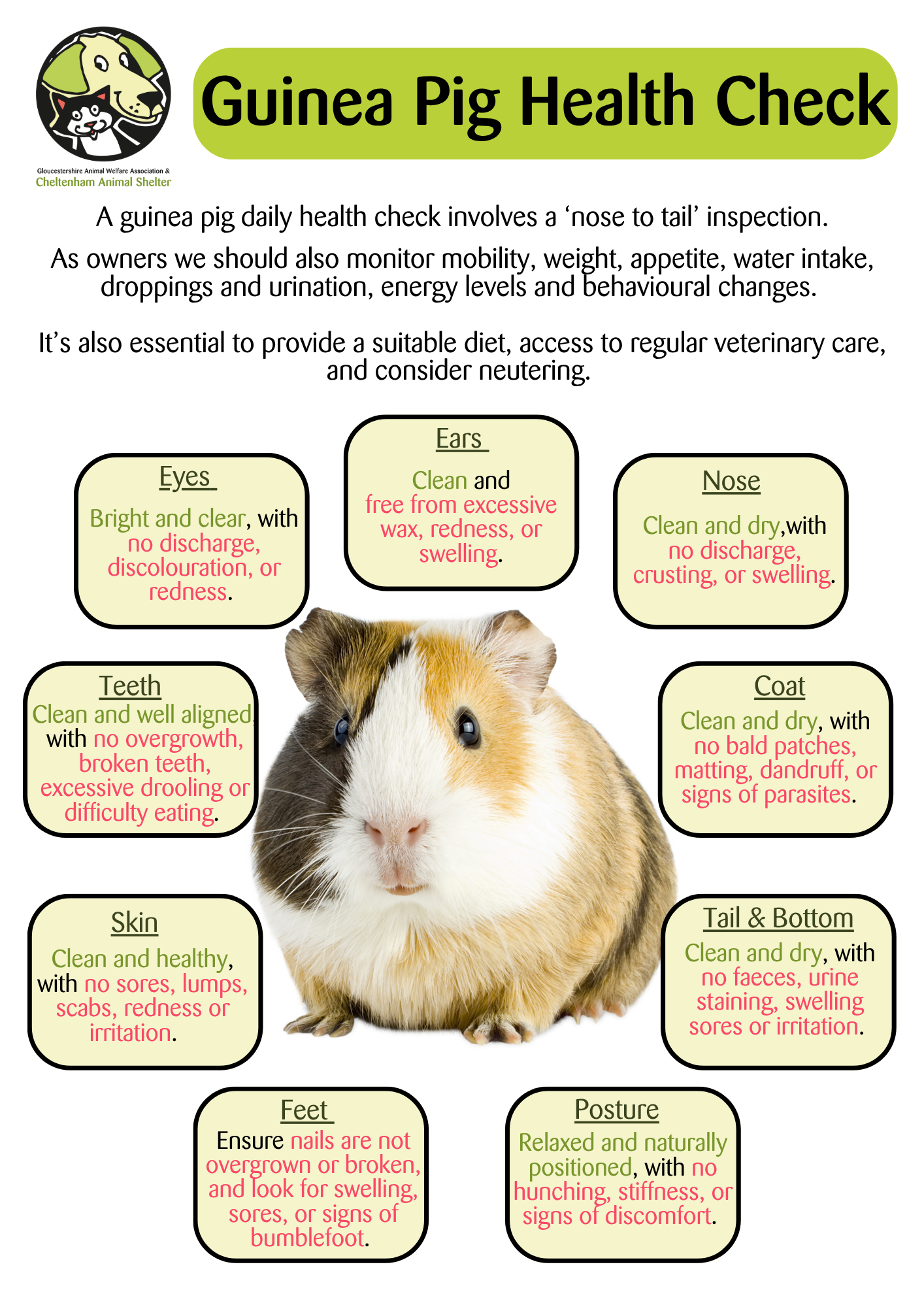
Guinea pigs should be seen by a vet at least once a year for a routine health check. With the correct care and diet, many health issues can be prevented, however this does not mean guinea pigs do not need veterinary treatment.
Guinea pigs are a prey animal; this means it is their instinct to hide if they are unwell. Due to this it is recommended that you should take your guinea pig to the vet if there are any sudden changes to their behaviour. This could include:
- Lethargy
- Reduced appetite
- Sudden changes in temperament e.g. sudden aggression
- Changes to stools or urinary output – loose stools, or little or loss of output.
- Hair loss
- Dry, flaking, or scabby skin
- Heavy breathing
We recommend checking over your pets daily to notice any changes in their physical health. Remember to only do what your pet is comfortable with.
“Guinea Pigs Communicate through a Range of Sounds” – TRUE
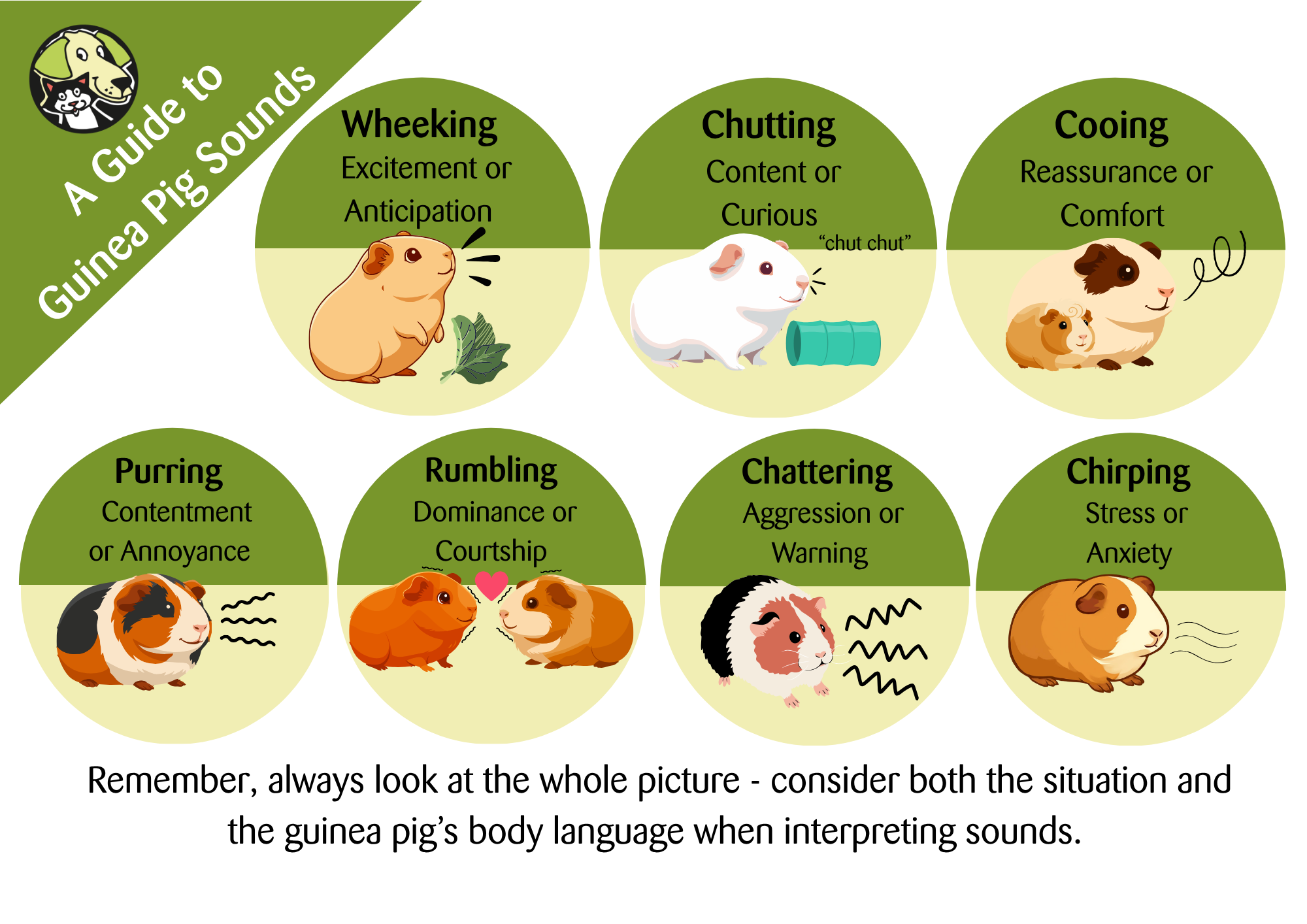
Guinea Pigs communicate through a range of sounds, scent, and body language.
As well as vocalisation a guinea pig will communicate their emotions through their body language.
- A calm relaxed guinea pig – they will be eating, they may lay down with their body stretched out, and groom.
- A worried and anxious guinea pig – may have tense body posture, puff their fur, and stand upright.
“Guinea Pigs are Nocturnal” – FALSE
Guinea Pigs are crepuscular which means they are most active at dawn and dusk. This means they take regular naps throughout the day.
“Guinea Pigs can see at almost every angle” – TRUE
Their eyes are located at the side of their face, which means they have an estimated vision of near 340 degrees. This allows them to see predators approaching from behind them. Due to their eye position, they cannot see directly in front of their noses. They rely on sense of smell and their whiskers to navigate spaces they can fit through and tasty treats on offer.
They are also at risk of complications such as eye-poke (where sharp hay pieces can scratch and damage the surface of your guinea pigs’ eye), and it is important to select a good quality soft orchard grass hay to prevent this occurring.
“Guinea pigs have their name as they are from Guinea” – FALSE
Guinea pigs do not come from Guinea; they originate from the Andes mountains! This is likely why they are uncomfortable in hot weather and should be provided with shaded areas and plenty of fresh water.
So how did they get their name?
This is unclear and there are several theories.
Some believe that is may be traced back to 16th century England where they were sold for a guinea; other theories think it was in error and it was originally mistaken that they were brought to Europe from Guinea.
It is speculated they gained the ‘pig’ part of their name due to their shape and mannerisms, even though they are in fact part of the rodent family.
With our batch of guinea pig myths busted, it’s time to wrap up our investigation. Guinea pigs can make amazing pets, but there is still a lot of misinformation surrounding them. By separating fact from fiction, we can better understand their needs and ensure that our guinea pigs live happy, healthy, and comfortable lives.
