
Rabbit’s experience the world very differently from us.
Their incredible hearing, powerful sense of smell, and eyesight are all designed to help them survive as prey animals.
They combine vision with movement, using their whiskers, hearing, and sense of smell to understand their environment, detect predators, and communicate with their companions.
Eyesight
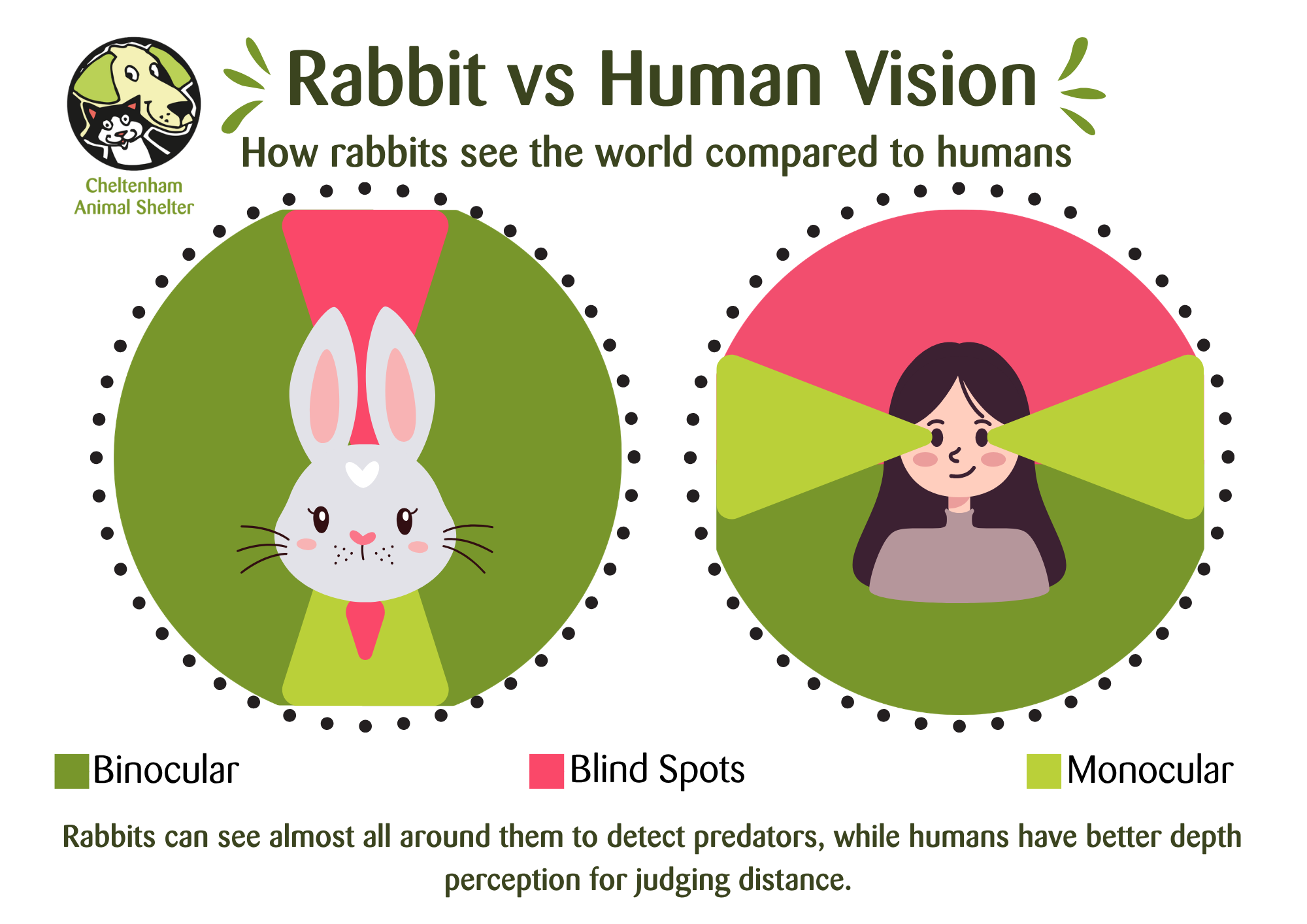
A rabbit’s eyes are positioned on the side of their head, giving them less precise depth perception than humans, as we have forward-facing eyes which allows us to judge distance more accurately. However, their eye placement gives rabbits an incredible survival advantage against predators – their near 360-degree vision.
360° Vision
Rabbits nearly have 360-degree vision!
Rabbit’s eyes are positioned on the sides of their head, giving them the ability to see nearly all the way around themselves without moving their head! This helps them to see approaching predators from almost any direction.
Due to their eye position, they have two blind spots – directly in front of their nose and directly behind their head. This is why they miss a dangling treat you offer them, as they cannot see directly in front of their face.
Whiskers
Their whiskers enable them to navigate the world around them by detecting objects close to their face and judging whether they can fit through narrow spaces.
Lighting
Rabbits are most active at dusk and dawn, when light levels are low. Their eyesight has adapted to see well in these conditions.
As a result, their vision is not at its best in bright sunlight or nighttime. However, rabbits can still see much better than us in the dark.
Colours
We can see a wide variety of colours, but this is not the case for rabbits. Scientists believe that rabbits have dichromatic vision. This means they see blues and greens, but have difficulty distinguishing reds, pinks, and oranges, giving them more limited colour vision. Instead of relying on colour, rabbits depend more on motion and movement to understand the world around them.
Hearing
A rabbit’s hearing helps keep them stay safe during low-light hours when they are most active.
Rabbits have much better hearing than us. They can hear a wider range of high-frequency sounds, helping them detect predators long before they see them. Their large ears can also rotate independently, allowing them to pinpoint sounds coming from different directions.
Even when rabbits are relaxed or sleeping, they are still listening for danger. You may notice their ears twitching or rotating in response to sound as they continue to monitor their surroundings.
Rabbits can also recognise familiar sounds, such as a food bag opening, the fridge door, your footsteps, and even their own name. This is why many rabbits come running when they hear a sound they associate with food!
Did you know a rabbit’s long ears are not just for hearing? They are also essential for regulating their body temperature. The blood vessels in the ears release excess heat, helping rabbits stay cool in warm weather.
Smell
A rabbit’s powerful sense of smell helps them identify food, recognise other rabbits, and detect potential dangers.
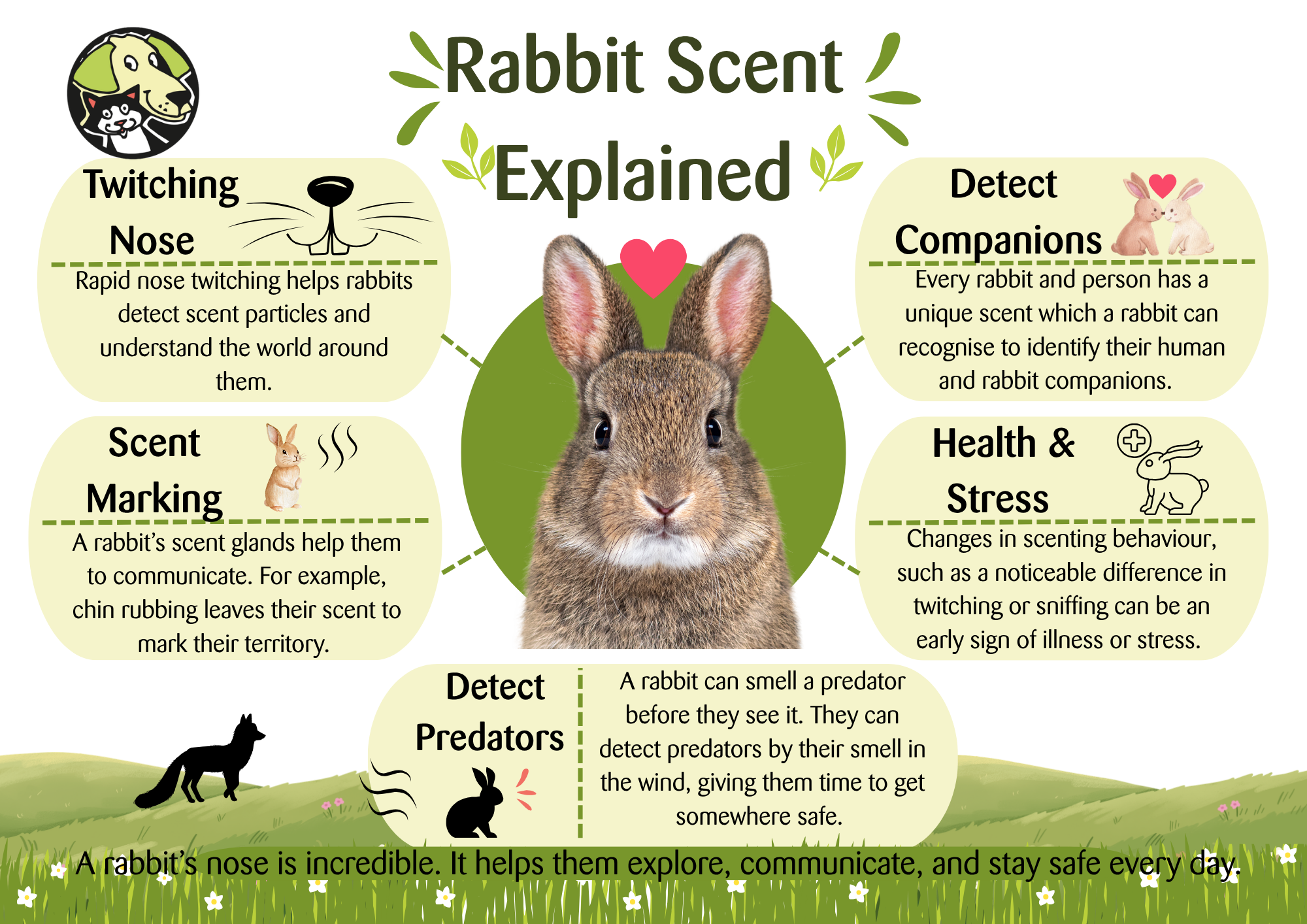
Did you know a rabbit’s nose can twitch up to 120 times in a minute?
It may twitch faster when the rabbit is excited, curious, or stressed, and slowly when they are relaxed or sleeping.
These rapid nose twitches enable them to gather scent information by drawing air over their scent receptors, so they can identify food, recognise companions, and detect potential dangers.
What does this mean for Rabbit Owners?
When Interacting with your Rabbits:
- Let the rabbit come up to you – give the rabbit space and choice by allowing them to approach you. Rabbits rely on their sense of smell to identify people, by letting come to us it helps them feel safe.
- Avoid touching their face and mouth – Due to their blind spots directly in front of their face and behind their head, an unexpected touch can startle them as they may not have seen the approaching hand. Fingers near mouths can also be mistaken for a tasty treat, especially if you have been handling their food.
- Gentle handling – Rabbits are prey animals and as humans we are a potential predator to a rabbit. Gentle, gradual, handling helps build trust between you and your rabbits.
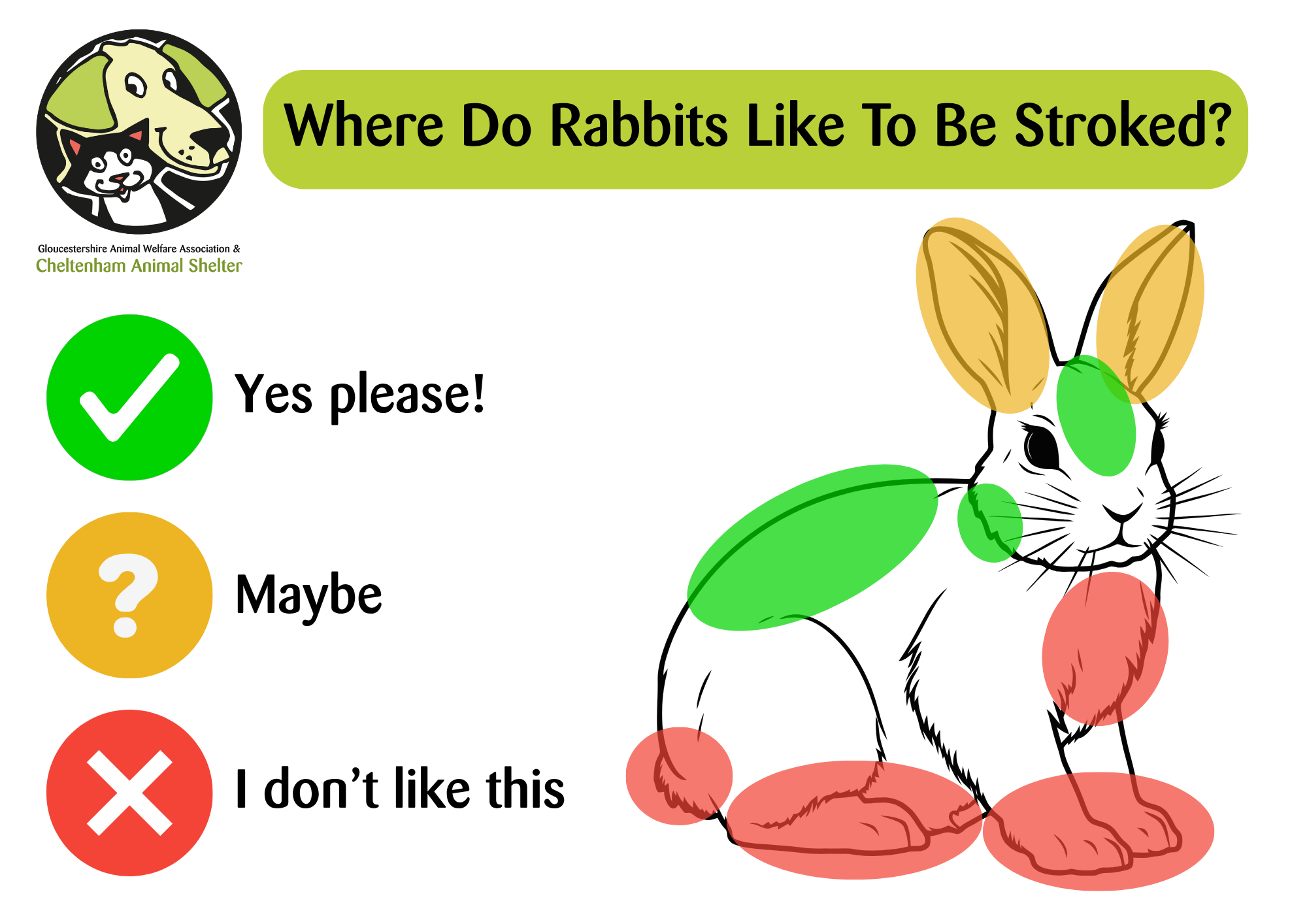
- Stroke the forehead, cheeks, or back gently – These are the areas rabbits generally like to be stroked. Gently stroking your rabbit here can help them relax.
- Interact with the rabbit on the floor – Rabbits feel more secure on the ground, as being lifted can feel like being caught by a predator, therefore, whenever possible we should spend time with them on the floor. This supports their sense of balance and reduces fear.
Remember…
- Approach your rabbit from the side rather than directly in front
- Avoid sudden movements
- Keep noise levels low, as loud noises can be scary for rabbits
- Provide plenty of hiding places where your rabbit can feel secure.
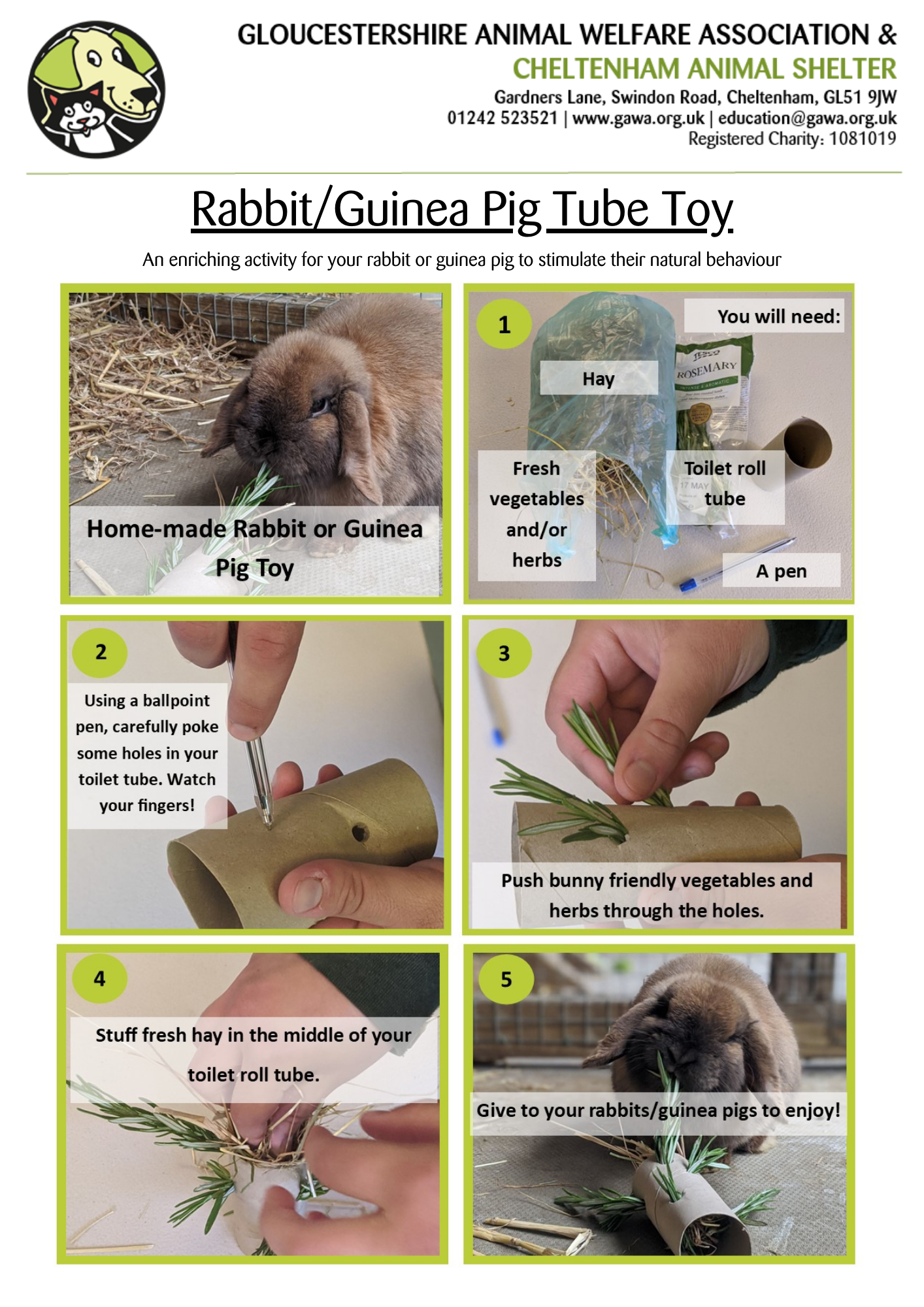
- Provide enrichment items, such as toys, chews, tunnels, treat balls, and puzzle feeders.
Rabbits have incredible senses, and providing enrichment encourages them to use these senses while expressing their natural behaviours such as, digging, foraging, and exploring. Enrichment also provides mental stimulation and helps prevent boredom.
Enrichment doesn’t have to be expensive – see some fun home-made enrichment ideas below!